Protocol Shifts in Mobile Table Games Reshape Reward Redemption Timelines
Written by Nils Patterson · Jun 20, 2026
Protocol Shifts in Mobile Table Games Reshape Reward Redemption Timelines
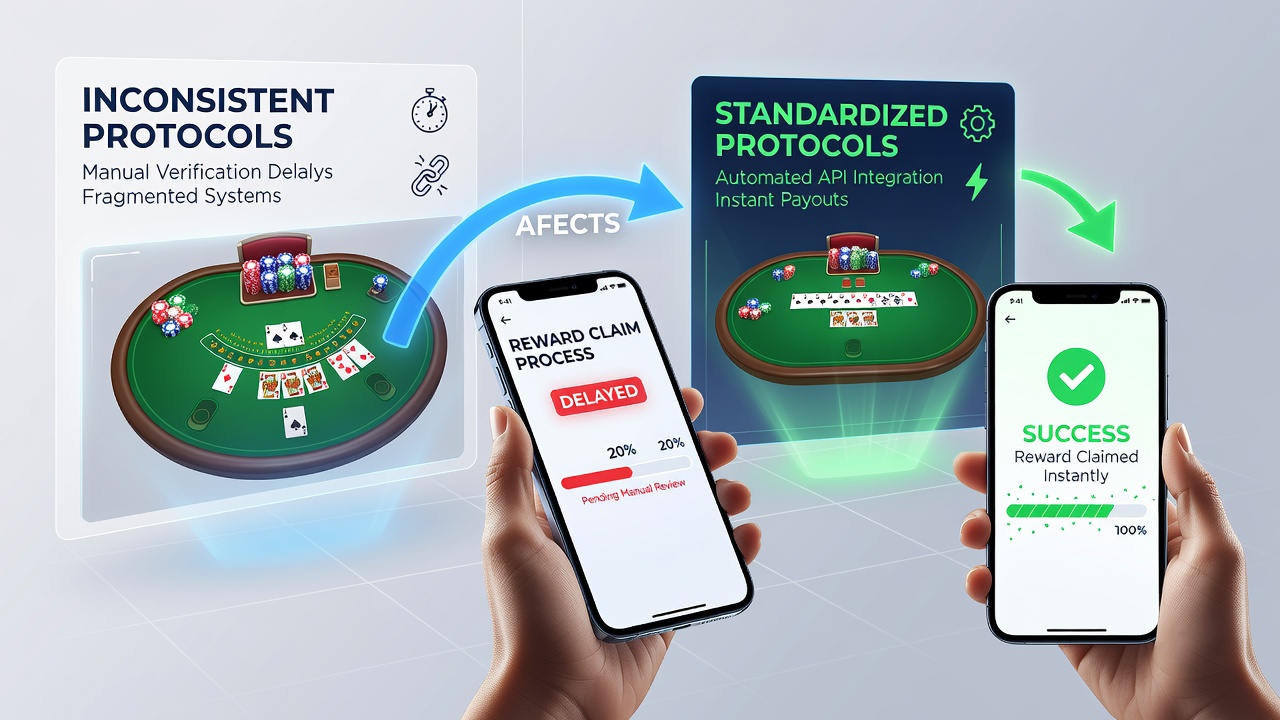
Table game protocols in mobile applications differ across software providers and regulatory jurisdictions, and these differences directly influence how players complete reward claim processes. Variations arise in random number generator standards, live dealer integration methods, session authentication sequences, and data transmission requirements that platforms must verify before releasing bonuses or winnings.
Core Protocol Differences Across Mobile Platforms
Random number generator protocols set one baseline for virtual table games, whereas live dealer streams rely on real-time video feeds and physical card tracking systems. Providers implement distinct encryption layers and API call structures, so a blackjack session on one application may require fewer verification steps than an equivalent round on another. Data shows that applications using standardized RNG protocols often complete initial reward eligibility checks within seconds, while live dealer setups introduce additional latency because operators must cross-reference physical deck outcomes with digital logs.
Session management protocols further separate these experiences. Some applications enforce continuous connection requirements that pause play if network signals drop, and those interruptions can reset reward accumulation timers. Others permit seamless reconnections that preserve ongoing session data, allowing players to resume without losing claim eligibility. Researchers note that protocol choices made by developers determine whether reward systems treat a dropped connection as a completed hand or an abandoned round.
Verification Requirements Tied to Protocol Types
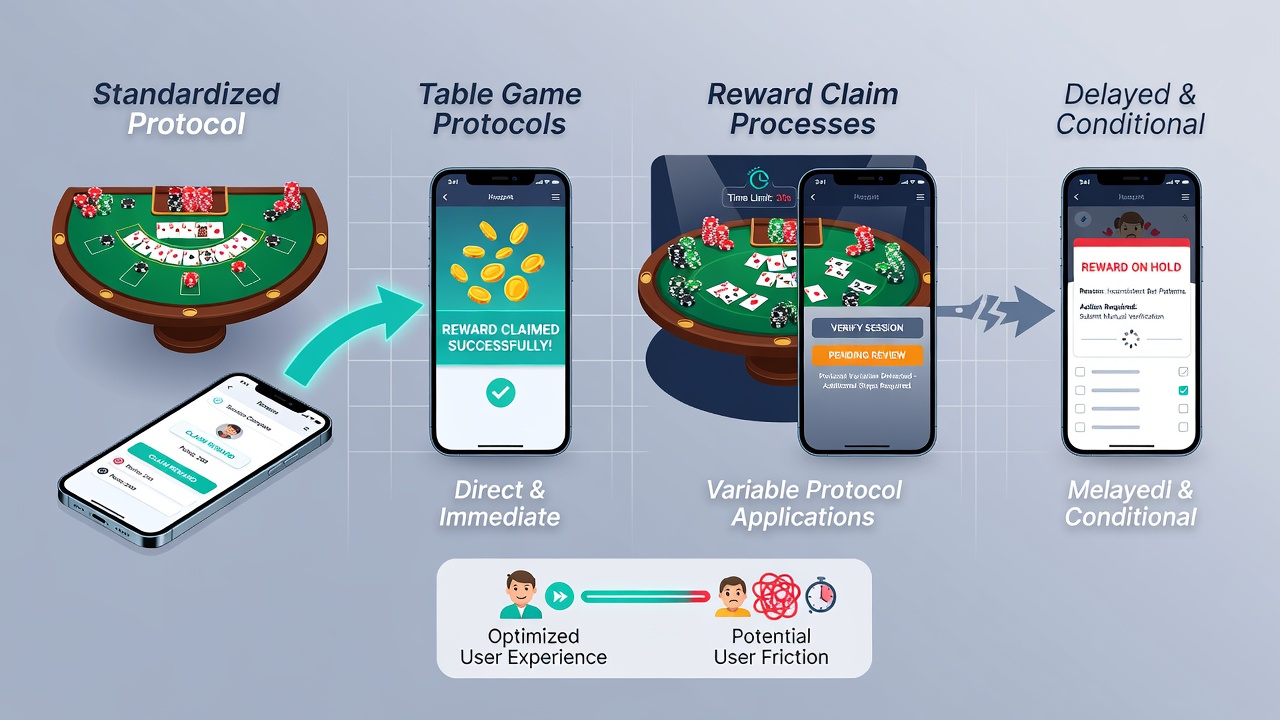
Reward claim processes incorporate identity verification, transaction history reviews, and game outcome confirmations that scale according to the underlying protocol. Applications built on lightweight RNG frameworks typically request fewer data points during payout requests, because outcome generation stays internal to the software. Live dealer protocols, by contrast, generate external data streams that platforms must reconcile with third-party feeds before approving claims.
June 2026 figures from multiple operators indicate that live dealer reward claims encounter an average 14 percent longer processing window than RNG-based claims within the same application. This gap stems from additional audit trails required to match video timestamps with bet records. Observers note that players using applications with unified protocol layers experience more consistent claim timelines regardless of whether they select virtual or live table options.
Geographic and Regulatory Influences on Claim Flows
Jurisdictional rules shape protocol implementation and therefore affect reward access. Platforms licensed in North American markets often adopt stricter session logging standards that extend verification periods, whereas certain Asian regulatory frameworks prioritize faster reconciliation through centralized reporting systems. These regional choices create noticeable differences in how quickly mobile users can finalize claims after table game sessions.
One study from the University of Nevada, Reno examined how protocol variations correlate with claim success rates across 12 mobile applications and found that games using modular API structures achieved 23 percent higher first-attempt approval rates for rewards. The findings highlight that developers who design flexible protocol bridges reduce friction during the redemption stage.
Impact on Player Strategies and Platform Design
Players adapt their table game selections based on observed reward claim patterns tied to specific protocols. Those seeking quicker access to bonuses gravitate toward applications that maintain consistent RNG frameworks across multiple game types, while enthusiasts of live dealer experiences accept longer verification windows in exchange for added authenticity. Platform operators respond by offering hybrid protocol options that let users switch modes without resetting reward progress indicators.
Transaction pathways also intersect with these protocol differences. Applications that route reward claims through the same channels used for live bet settlements can streamline approvals, whereas separate pathways for virtual and live outcomes create additional checkpoints. Data from industry reports released in early 2026 reveal that unified transaction layers correlate with reduced claim abandonment rates across mobile table game categories.
Technical Implementation Challenges
Developers face ongoing decisions about protocol standardization versus customization. Custom protocols allow distinctive features that differentiate applications in competitive markets, yet they introduce complexity during reward verification because each custom element requires separate validation scripts. Standardized protocols simplify these scripts and shorten processing sequences, although they limit unique gameplay innovations.
Experts have observed that applications balancing both approaches through modular designs maintain higher user retention around reward claim events. The modular method permits live dealer integration without forcing all table games through identical verification gates, so reward systems can apply targeted checks only where protocol differences demand them.
Conclusion
Variations in table game protocols continue to determine the speed, complexity, and success rates of reward claim processes in mobile applications. As operators refine their technical frameworks and regulators update compliance requirements, these protocol choices will keep shaping how players interact with rewards across different game formats and geographic markets.