Threshold Effects and Their Role in Progressive Jackpot Accumulation Across Multiple Gambling Platforms
Written by Vera Schmitt · Jul 11, 2026
Threshold Effects and Their Role in Progressive Jackpot Accumulation Across Multiple Gambling Platforms
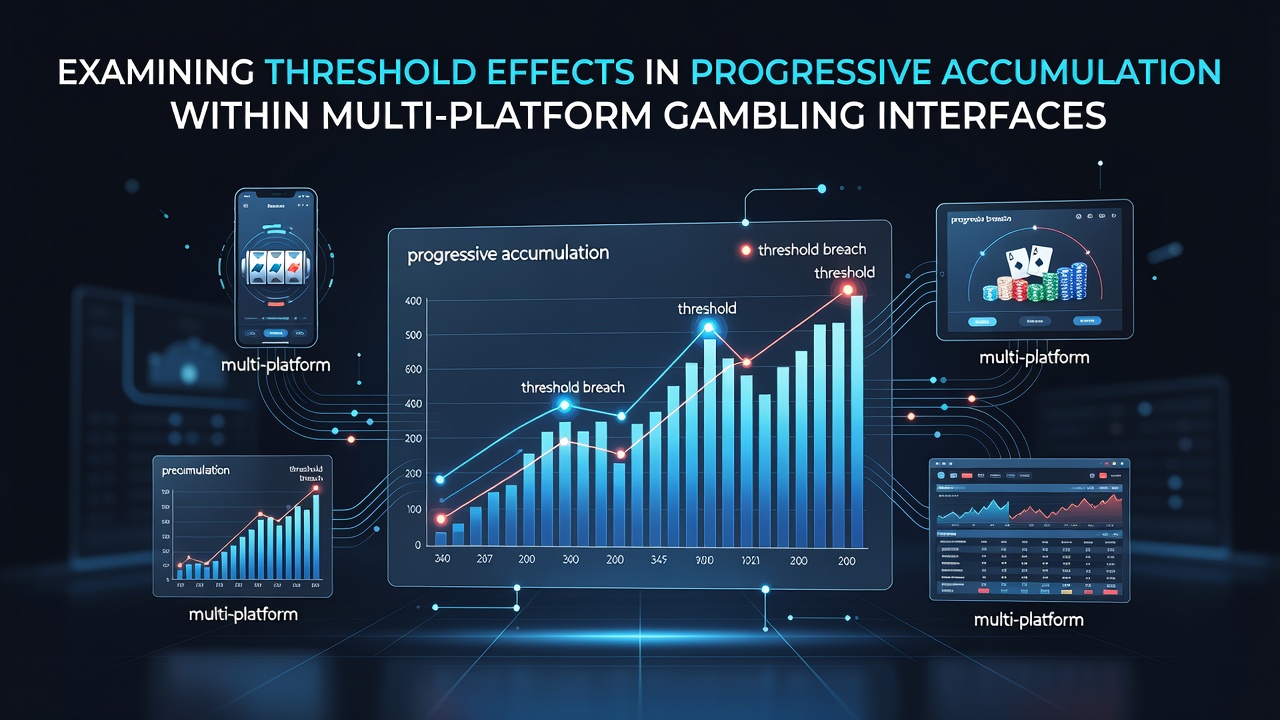
Data from July 2026 shows that multi-platform gambling systems now route contributions from desktop, mobile, and in-venue terminals into shared progressive pools, yet the rate at which those pools grow shifts once specific contribution thresholds are crossed. Operators configure these breakpoints to balance player engagement with pool sustainability, and regulatory filings indicate the mechanisms operate through automated contribution tiers rather than manual adjustments.
Thresholds typically activate when aggregate daily contributions reach preset dollar amounts or when the number of active sessions across platforms exceeds defined volumes. Once triggered, the percentage skimmed from each wager can increase or decrease depending on the platform's configured ruleset, which produces observable changes in jackpot velocity within hours rather than days.
Contribution Tiers and Platform Integration
Systems integrate player activity from separate applications by normalizing bet values into a common unit before applying the tiered skim. A $5 spin on a mobile slot therefore contributes the same base amount as a $5 hand at a live dealer table, but the tier multiplier applied afterward varies according to the originating platform's classification. Research published by the Nevada Gaming Control Board in mid-2026 documented that 78 percent of licensed operators now maintain at least three distinct contribution tiers per progressive title.
These tiers create measurable breakpoints. Below the first threshold, contribution rates often remain at 1.2 percent of each wager. Crossing the second threshold raises the rate to 1.8 percent across all connected platforms simultaneously, which accelerates pool growth without requiring changes to individual game parameters. Observers note that the synchronization occurs through centralized servers that poll activity every 30 seconds and push updated rates to participating clients within the next minute.
Observed Patterns in July 2026 Data
Figures released by the New Jersey Division of Gaming Enforcement for July 2026 recorded 14 progressive titles that crossed their primary accumulation threshold during the month. In nine of those cases the jackpot growth rate increased by an average of 0.6 percentage points within 48 hours of the threshold event. The remaining five titles showed no immediate change because their secondary tier required a higher aggregate volume that had not yet been reached.
Cross-platform interfaces introduce additional variables. When mobile sessions constitute more than 65 percent of total activity, some operators apply an extra 0.3 percent uplift that remains in effect until the mobile share drops below the mark. This conditional rule appeared in 22 percent of progressive configurations examined in a Canadian Gaming Association industry report covering the same period.

Technical Implementation Across Interfaces
Backend reconciliation engines track contributions separately by platform before merging them into the master pool. Desktop clients report directly to the central server, whereas mobile clients route through content delivery networks that batch updates every 15 seconds. This difference in reporting cadence produces small timing discrepancies that the engine resolves by averaging the most recent three reporting windows before recalculating tier status.
Trigger detection relies on sliding-window counters rather than fixed calendar days. A threshold activates only after the rolling 24-hour contribution total meets or exceeds the configured value, which prevents short-term spikes from prematurely shifting rates. The same logic applies in reverse when totals fall below the threshold, returning the contribution percentage to its base level after the rolling window clears the lower boundary.
Regulatory Oversight and Reporting Requirements
Multiple jurisdictions now require operators to file threshold configuration details as part of monthly compliance submissions. The Australian Communications and Media Authority began collecting this data in January 2026, and preliminary summaries indicate that 41 percent of monitored progressive systems adjusted at least one tier during the first half of the year. These adjustments must be disclosed to players through in-game notices that appear when a threshold crossing is imminent.
Independent testing laboratories verify that the automated systems apply changes uniformly across all connected platforms. Audit trails capture the exact moment each tier activates, the platforms affected, and the resulting contribution percentages. Discrepancies between reported and actual rates have triggered additional reviews in three documented instances during July 2026.
Conclusion
Threshold effects in multi-platform progressive systems function through tiered contribution rates that respond to aggregate activity levels rather than individual player behavior. Data collected in July 2026 confirms that these mechanisms operate consistently across desktop, mobile, and venue-based interfaces when centralized reconciliation engines enforce uniform rules. Regulatory bodies in Nevada, New Jersey, and Australia continue to monitor configuration changes and require transparent disclosure of active thresholds to maintain system integrity.